
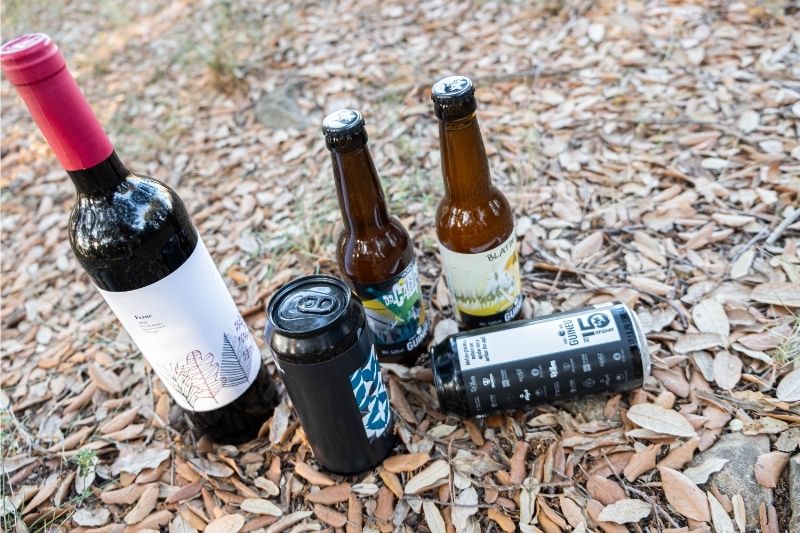
Labeling and packaging for edible goods must comply with several key aspects such as:
- Food safety, complying with EU 10/2011 and FDA 21 CFR 177.1520.
- Legibility of mandatory information on ingredients, allergens and shelf life is crucial when it comes to food.
- Durability and adhesion of labeling, which must withstand environmental conditions such as humidity, temperature changes, freezing, handling and contact with liquids, alcohol and oils.
What is EU 10/2011 and FDA regulation 21 CFR 177.1520?
EU 10/2011 ensures that plastic materials do not release harmful agents into food. This regulation provides a list of allowed substances and limits that is being updated and is available on the
Also,
———————————–
But a good synthetic paper solution must be accompanied by good printing to fully meet its purpose.
Which printing system is the best to achieve good legibility and durability of the food label?
The choice of a printing system will depend on the specific needs of the product, considering factors such as volume, materials and the conditions of the environment in which it will be stored or distributed.
When it comes to synthetic papers for food products and packaging, there are several possibilities:
- Offset and UV offset printing:
Although the two systems are compatible with the synthetic paper solution for edible products, there are some key differences that originate from the type of ink and curing.
UV offset is usually more expensive, but more suitable for meeting food safety standards, due to its immediate curing and low risk of ink migration. It also offers more vivid and durable colors in the face of environmental factors such as humidity or temperature changes.
- Traditional flexo and UV flexo:
UV flexo can be more expensive due to its specialized equipment and inks but offers instant curing that translates into advantages in terms of speed, quality, efficiency, adhesion, more vivid colors and regulatory compliance, making it ideal for a product where safety is critical.
- Thermal transfer:
It is another possibility that offers benefits such as print quality, durability, legibility, and resistance to adverse conditions such as humidity and freezing. However, there are also some downsides such as costs due to e.g. the dependence on printing ribbons, lower speed and sensitivity to heat.
- Screen printing:
Allows thicker ink layers providing greater robustness to external factors. It also offers excellent opacity and coverage. Its disadvantages are speed and higher costs compared to other printing systems, as well as low precision in fine details, and low adaptability to change.
———————————–
Apart from the printing system, when we talk about food it is essential to take into account that food grade inks must be used, that is, non-toxic and approved by regulations such as the FDA and EU regulations.