
What is the digital product passport and why does it matter for textiles?
The digital product passport (DPP) will be one of the major transformations in the textile sector in the coming years. Driven by the European ecodesign regulation, its goal is to improve traceability, transparency, and sustainability throughout the entire lifecycle of a product.
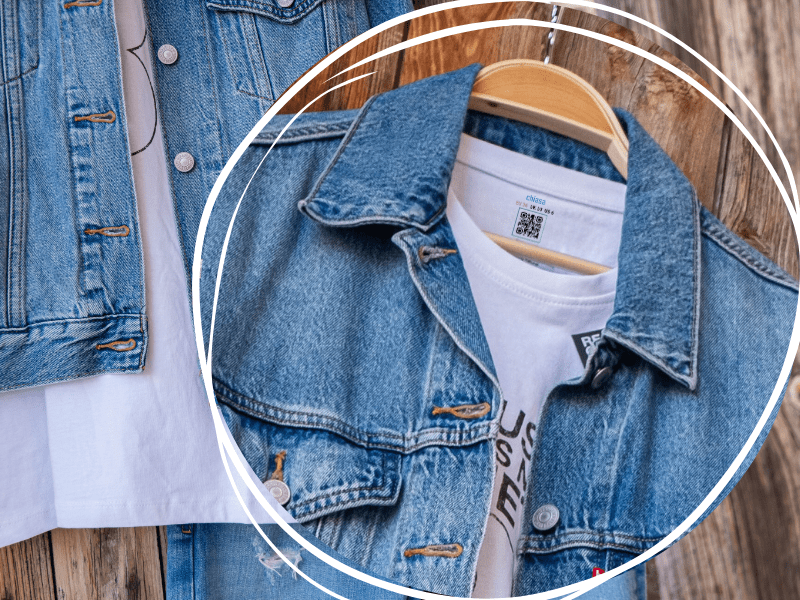
In practice, this means that every garment will need to include a digital access point—usually through a QR code or DataMatrix—allowing users to consult relevant information such as composition, origin, care instructions, or recycling guidelines.
The label: from informational element to access point
In this new context, the label is no longer a secondary component. It becomes the gateway to the product’s information.
This represents a major shift: it’s no longer enough for a label to be readable at the moment of purchase. It must continue to perform its function throughout the entire useful life of the garment.
A label is no longer just a label. It is the door to the product.
The big challenge: durability
For the DPP to be truly useful, the information must remain accessible over time. And here lies the main challenge in textile labeling:
• Frequent washing • Intensive use • Friction • Exposure to different conditions
Not all materials are prepared to withstand these factors without losing legibility or adhesion.
Two labeling approaches for the DPP
Not all labeling solutions respond equally to this challenge. Broadly speaking, we can distinguish two approaches:
- External labels (hangtags) They are useful at the point of sale and make it easy to include variable information. However, their lifespan is limited, as they are usually removed after purchase.
- Labels integrated into the garment These are labels that adhere to or form part of the textile itself. This type of solution allows the label to remain with the garment throughout its entire lifecycle, ensuring that the information stays accessible after multiple washes and uses.
This is where the choice of material becomes especially important.
Materials prepared for the new scenario
To meet the requirements of the DPP, labeling materials must comply with several key criteria:
• High resistance to washing and wear • Strong adhesion or integration into the garment • Compatibility with variable data printing (QR, DataMatrix) • Sustainable or recyclable options
It is also important to consider both permanent solutions and alternatives for removable or complementary applications, such as hangtags.
An opportunity for printers
The DPP is not only a technical challenge—it is also an opportunity.
For printers, it opens the door to expanding their value proposition:
• Advising on material selection • Offering more complete solutions • Incorporating services related to traceability
It’s no longer just about printing a code, but ensuring that the code continues to function over time.
The advancement of the DPP requires materials capable of withstanding real-world use and printing processes that guarantee long-term legibility. Meeting this challenge means adapting solutions to this new scenario, integrating durability, variable data, and sustainability. The challenge is technical, but the response will always be collaborative.