
Film transfer in fashion and home textiles: technical criteria before technology
In fashion and home textile projects, labeling is no longer a secondary element. More and more brands are looking to integrate information directly into the garment or textile product, reduce sewn elements, and take care of both the aesthetics and comfort of the end user.
This shift doesn’t only affect design — it introduces new demands at the production and printing level.
The real starting point: the application
In many technical decisions within the textile sector, the common mistake is to start by talking about technology. However, the criteria should always begin with the real application:
- What type of garment or textile item is it?
- What is its final use and washing frequency?
- What level of hand feel, durability, or visual integration is expected?
- Will there be personalization, short runs, or frequent replenishments?
Answering these questions is often more decisive than choosing a specific printing system.
Integrating information without interfering with the product
When information is applied directly onto the fabric, the challenge isn’t just printing it — it’s doing so without altering the behavior of the material:
- Without excessive stiffness
- Without adding elements that may cause discomfort
- Without compromising the visual coherence of the product
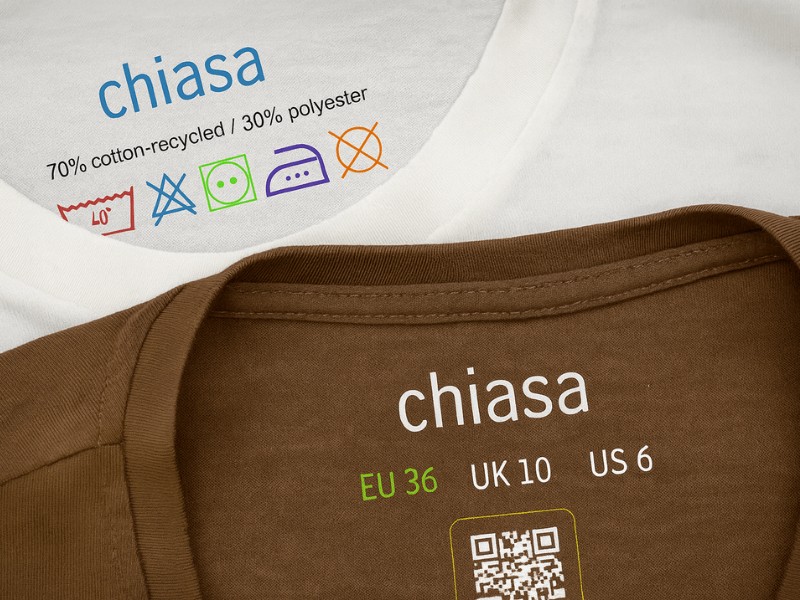
In this context, film transfer becomes a technically coherent option for certain applications in fashion and home textiles, especially when the goal is an integrated, discreet, functional label.
Not as a universal solution, but as a response to very specific needs.
The role of film transfer in real textile applications
Using film transfer allows the final customer to receive:
- Information applied directly onto the garment or fabric
- Strong graphic definition
- Control over hand feel
- A clean visual integration with no sewn elements
From the printer’s perspective, it also brings something essential: flexibility.
A single material can be used with different printing systems — such as DTF, screen printing, or inkjet — without imposing a single production path. This makes it possible to adapt each project to the most efficient process, while maintaining technical control and consistency in the final result.
Technology as a means, not an end
In fashion and home textiles, technology should be a tool that serves the project — not the factor that restricts it.
Working with materials that adapt to different production scenarios allows you to:
- Better meet the expectations of the final customer
- Reduce friction in the printing process
- Make technical decisions with greater freedom
Film transfer, when well selected and properly applied, fits this way of working: supporting the printer’s technical criteria and enabling coherent solutions without forcing the process.
A matter of criteria, not trends
Talking about labeling in fashion and home textiles shouldn’t revolve around trends or printing systems, but around understanding the real use of the product and its context.
Analyzing the application before discussing materials or technologies remains, today, the most honest and effective way to approach textile projects with technical rigor.