
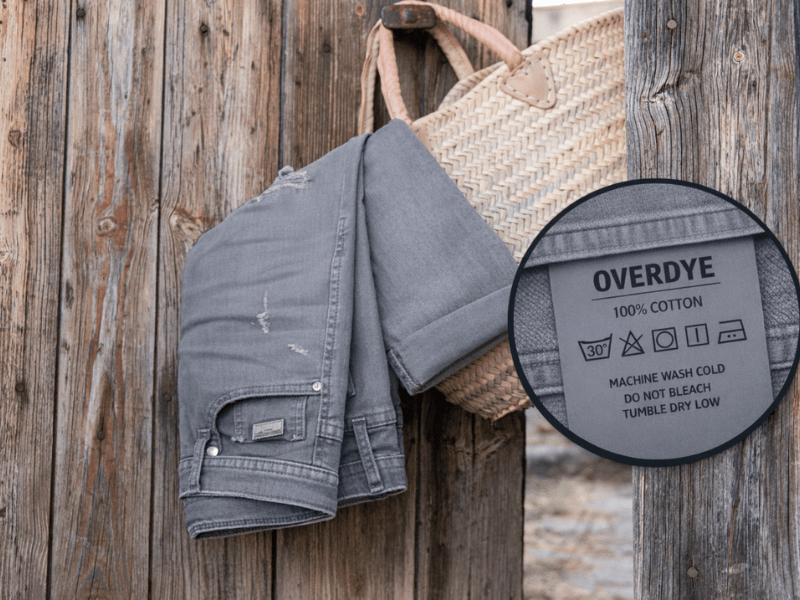
In many textile projects, the label or substrate becomes part of a product that will be dyed later. When this happens, the material’s behaviour during printing and its stability are essential. Overdye materials are specifically designed for these applications: substrates that must be integrated into a garment or textile item that will subsequently undergo a dyeing process.
Two solutions for the same application
Within this range, there are two options that address the same need: standard overdye and recycled overdye. Both are designed to:
- Offer good printability
- Maintain stability during production
- Adapt to different printing technologies
- Integrate correctly into dyeing processes
From a technical standpoint, both solutions deliver the same performance and behaviour during printing and dyeing. This allows manufacturers to work with either option without modifying their usual processes.
The difference lies in the material origin
The only difference between the two options is the origin of the raw material used in the substrate.
Recycled Overdye incorporates recycled content, reducing the use of virgin raw materials without altering the material’s behaviour. This improvement is integrated into the substrate without affecting the printing process or the subsequent dyeing stage.
When to choose each option
Since the technical performance is identical, the choice typically depends on the type of project and the positioning of the final product.
Overdye
It is usually the right choice when:
- You want to optimise costs
- You are working with high‑volume productions
- There are no specific requirements regarding material origin
Recycled overdye
It makes more sense when:
- The brand incorporates sustainability criteria
- The product communicates environmental values
- You want to integrate recycled material into the substrate
In practice, the decision is more often linked to brand criteria than to technical differences.
Available in white and black
The Overdye range is available in two colours to suit different design and production approaches.
White overdye
- Suitable for applications that will be dyed later
- Offers greater flexibility in the final color of the product
Black overdye
- Ideal for products with a dark base
- Suitable when the final design incorporates black tones
About the recyclability of the final product
In many Overdye applications, the substrate becomes part of textile products that will be dyed together with the garment. The recyclability of the final product depends on multiple factors: type of fabric, finishes, dyeing processes, and more.
For this reason, the value of recycled overdye lies in incorporating recycled content into the substrate, reducing the use of virgin raw materials while maintaining the same technical performance and integration in the production process.
More options for textile projects
The introduction of a recycled version does not replace the existing solution—it expands it. This way, printers and brands can choose between two materials with the same technical performance, adapting the substrate’s origin to the criteria of each project.